Why Ophthalmology
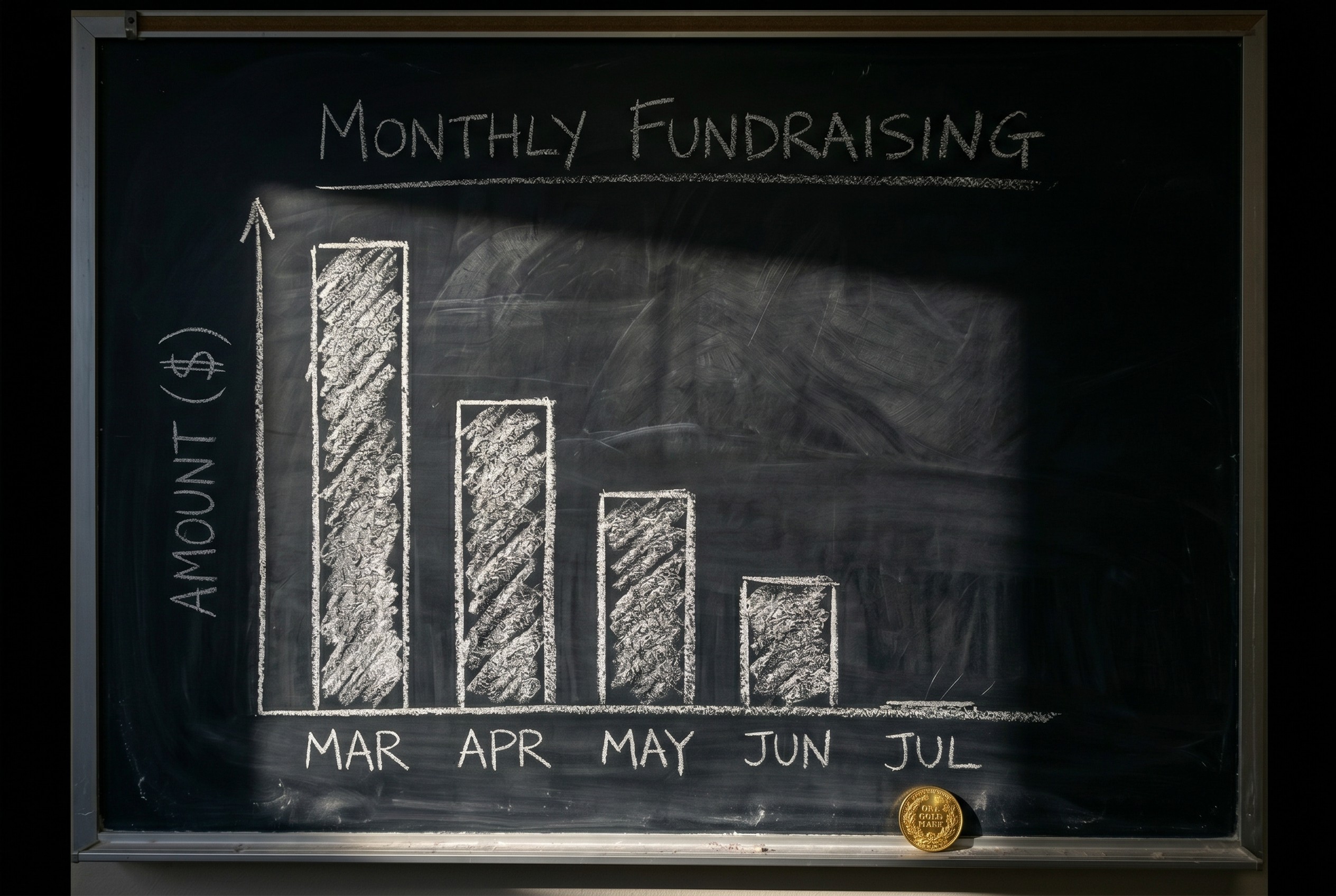
In the first half of 2025, the entire healthcare specialist private equity category raised $9.5B across 10 funds, and $5.4B of that was Linden Capital Partners Fund VI. Remove the single largest fund and the remaining nine healthcare PE funds closed in H1 2025 collectively raised $4.1B. For context, 2023 peak healthcare specialist PE fundraising was $21.7B and the 2021 peak was $18.3B ; the H1 2025 number excluding Linden represents roughly a 75-80% contraction from peak fundraising levels. That's capital formation breaking down in a category, not a routine cyclical slowdown. For capital positioned to acquire physician-led practices across the next decade, understanding what this collapse actually means, and doesn't mean, is the starting point for understanding where the remaining opportunity in American ophthalmology actually sits.
The Fundraising Numbers in Context
PitchBook's H1 2025 Healthcare Funds Report documents the category-level fundraising data for healthcare-specialist PE funds, and healthcare services deal value in 2025 hit $9B, down from $15.2B in 2024, a 41% year-over-year decline per PitchBook's November 2025 analysis. The broader global private equity exit environment compounds the picture. Global PE exits peaked at 1,210 in 2021, and through December 22, 2025, global PE exits totaled 321. Approximately 28,000 PE-backed companies remain unsold globally, representing roughly $3.2T in unrealized net asset value per Bain & Company's 2025 year-end review.
The DPI pressure that institutional LPs now apply to fund managers is the underlying driver. The Institutional Limited Partners Association's 2024 member survey found that 74% of institutional LPs now rank realized distributions to paid-in capital (DPI) as the primary evaluation criterion for manager continuation, up from roughly 40% a decade ago, and median PE fund hold period stretched from 4.2 years in 2010 to 6.8 years by 2023 per Cambridge Associates benchmark data. The translation is direct: LPs are demanding that fund managers return cash rather than continue extending hold periods or rolling assets into continuation vehicles, fund managers that can't demonstrate DPI can't raise new funds, new funds that can't raise capital can't form new platforms, and existing platforms that can't exit can't free up sponsor capital for new investments. That's what drove the 2017-2019 ophthalmology platform cohort into its current stuck position: those platforms hit the natural 5-7 year hold-period exit window during 2023-2025, just as the exit environment was collapsing and LP DPI pressure was intensifying.
What Linden VI Tells Us about the Rest of the Market
Linden VI represents the single largest healthcare specialist PE fund in the market's history. Linden raised that capital despite the broader environment, which says something about the firm's specific track record and LP relationships, not about the category's health. Remove Linden, and the picture for the rest of healthcare specialist PE is far worse. Nine funds raising $4.1B collectively averages roughly $450M per fund, a small fraction of what comparable healthcare funds raised at peak, and several of the funds in that nine-fund cohort closed at substantially lower than their original target sizes, indicating sub-scale final closes across multiple sponsors. That distribution pattern, where one dominant fund takes half the capital and the rest scramble, is typical of late-cycle markets where LP capital concentrates in perceived winners while smaller or mid-tier managers struggle to reach minimum closes.
For ophthalmology specifically, the implication is direct. New PE platform formation in ophthalmology during 2026-2027 will be constrained by fund formation in 2024-2025, and if those funds didn't raise at historical scale, the capital isn't there to seed new platform builds. Existing platforms are in exit-management mode, not acquisition mode.
The Exit Queue Problem
Bain & Company's 2026 Global Healthcare Private Equity Report documented record healthcare PE deal value in 2025 at $191 billion globally, up sharply from 2024 and approaching the 2021 peak, but the composition of that deal volume tells a different story than headline numbers suggest. Physician group transactions represented 23% of provider services PE deal value in 2025, down from 28% in 2021, and more than 150 sponsor-to-sponsor transactions totaled over $120 billion in 2025: PE selling to PE, rolling assets between funds rather than executing strategic or IPO exits. The sponsor-to-sponsor exit path works when LPs accept continuation vehicles and secondary sales, but breaks down when LPs demand realized DPI, which is exactly what ILPA's 2024 survey documented. The tension between sponsor behavior (continuation, secondary sales, extending hold periods) and LP demands (realized distributions) is the structural constraint that's tightening across 2025-2026.
In ophthalmology specifically, the 2017-2019 platform cohort includes EyeCare Partners, EyeSouth Partners, Vision Innovation Partners, American Vision Partners, Unifeye Vision Partners, and several smaller platforms. By 2023-2025, this cohort was expected to execute exits either to strategic buyers, IPO, or secondary PE sponsors. What happened instead tells the story of a cohort that mostly couldn't exit on plan. EyeCare Partners executed an out-of-court liability management exercise in April-May 2024, restructuring debt rather than exiting, with first-lien debt trading at roughly 54 cents on the dollar ahead of the restructuring. Vision Innovation Partners continued add-on acquisitions (27 through early 2026) without executing a clean exit. American Vision Partners acquired Evernorth Care Group vision services from Cigna in August 2024 but faces an unresolved February 2025 whistleblower complaint from Dr. Charles Mayron. Unifeye Vision Partners took growth capital from Morgan Stanley Private Credit and PGIM in May 2025 and named a new CEO in October 2025, indicators of inability to execute clean exit. Retina Consultants of America sold to Cencora for $4.4B in January 2025, the successful exit in the cohort, notably to a pharmaceutical distributor rather than another PE platform. PRISM Vision sold to McKesson for $850 million in April 2025, again to a pharmaceutical distributor. Eye Health America executed sponsor-to-sponsor add-ons, including the February 2025 acquisition of Quigley Eye Specialists from New Harbor Capital, working within the shrinking sponsor-to-sponsor exit channel.
The pattern is consistent. The successful exits went to pharmaceutical distributors (strategic corporate buyers) at strategic multiples, while the rest of the cohort either restructured, extended hold periods, took growth capital in lieu of exits, or pursued sponsor-to-sponsor add-ons within a tightening secondary market. Pharmaceutical distributor strategic exits at 18x EBITDA won't repeat across the entire cohort because strategic corporate buyers have limited appetite for multi-platform acquisitions in the same specialty: Cencora won't buy three more RCA-equivalent platforms, McKesson won't buy three more PRISM-equivalent platforms, and the strategic demand is bounded. What that leaves is a cohort of PE ophthalmology platforms that formed 2017-2019, hit exit cycle 2023-2025, and now don't have obvious buyers. Those platforms will either restructure (like EyeCare Partners), take continuation capital (like Unifeye), or eventually liquidate in distressed sale scenarios (like several smaller platforms have already done in adjacent specialties).
What This Means for the Remaining Ophthalmology Opportunity
The combination of healthcare PE fundraising collapse, exit environment breakdown, and LP DPI pressure produces a specific structural outcome in ophthalmology: the PE buyer class that absorbed hundreds of practices between 2017-2023 is no longer a significant acquirer of new practices in 2026-2027. The implications compound across the category. New PE platform formation is constrained because new healthcare funds aren't reaching historical fundraising scale. Existing PE platforms are focused on their own exit challenges rather than pursuing new acquisitions. Sponsor-to-sponsor secondary sales work for large platforms but don't absorb sub-$10M practice-level transactions. Strategic corporate buyers (Cencora, McKesson, Cardinal) operate above $800M transaction sizes and don't transact at the individual practice level. Hospital systems exited physician employment expansion at six-figure per-physician annual losses.
That leaves operator-led, patient-capital platforms as the remaining structurally viable buyer class for the roughly 4,300 independent ophthalmology practices approaching succession between 2026 and 2030. Capital that doesn't depend on fund formation rates, doesn't require 5-year exit cycles, doesn't need 18x strategic multiples to justify transactions, and can transact at sub-$10M deal sizes. The fund formation collapse isn't bad news for physician-led ophthalmology; it's the signal that the capital structure that dominated consolidation for the last decade has broken, and what replaces it determines the specialty's next generation of ownership.
Patient capital operating through permanent-hold structures matches the underlying asset characteristics of physician-led ophthalmology far better than the PE fund capital that dominated the category from 2017-2023. Longer hold periods match longer physician career arcs, direct operator investment matches direct practice ownership, and indefinite time horizons match the multi-decade compounding characteristics of well-run ophthalmology practices. The collapse of healthcare PE fundraising isn't just a cyclical event; it's the handoff from one capital era to the next, and the capital class structurally positioned to participate in the next era is precisely the class that couldn't compete when LBO debt and short-cycle PE capital dominated the category. Half the H1 fundraising went to one firm, the rest of the category came in 75-80% below peak, and the capital arriving next looks nothing like the capital that dominated before it.
Educational material only. Figures are illustrative and individual results vary. Images are AI-generated illustrations and do not depict actual Verdira practices, physicians, or patients. See our Disclosures.

Written by
Verdira Team
Verdira is building a permanent home for ophthalmology practices. We write about succession, physician ownership, and the forces reshaping eye care in the United States.
Ready to secure your legacy?
We're here to ensure your hard work is valued and your business thrives as part of Verdira.
Disclosures
The content of this site is for general informational purposes only and is not intended to constitute an offer to sell or a solicitation to buy any security or other asset, or a promise to undertake or solicit business, and may not be relied upon in connection with any offer or sale of securities or other assets.
The content of this site is for general informational purposes only and is not intended to constitute an offer to sell or a solicitation to buy any security or other asset, or a promise to undertake or solicit business, and may not be relied upon in connection with any offer or sale of securities or other assets.
The content of this site is for general informational purposes only and is not intended to constitute an offer to sell or a solicitation to buy any security or other asset, or a promise to undertake or solicit business, and may not be relied upon in connection with any offer or sale of securities or other assets.
© 2026 Verdira Management NY, LLC